
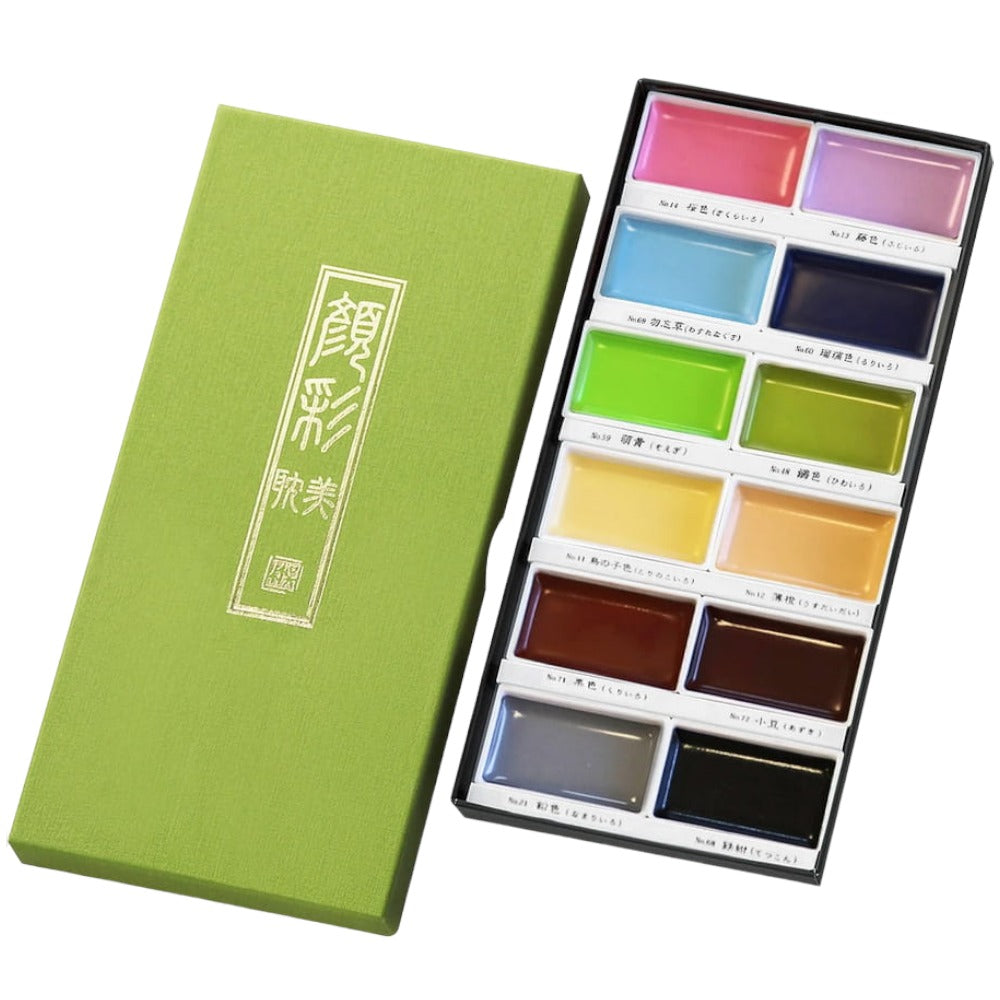
Gansai Tambi Watercolor
Kuretake Gansai Tambi Watercolors are traditional Japanese-style pan paints (Gansai) produced in Japan by Kuretake. While they function similarly to Western watercolors, their formulation, behavior, and physical design differ significantly.
Key Properties & Technical Differences
-
Binder & Finish: Gansai paints use water-soluble resins and specialized binders rather than traditional gum arabic alone. When used with a small amount of water, they go on opaque with a creamy texture and dry with a subtle satin/glossy sheen. Diluted with more water, they act like transparent washes.
-
Oversized Pan Format: Pans measure roughly 48 mm×28 mm—substantially larger than standard Western half or full pans. This large, shallow layout allows artists to easily load wide wash brushes or Asian calligraphy brushes without damaging the bristles.
-
Flow & Wet-on-Wet Behavior: Unlike Western watercolors, which disperse rapidly when dropped into wet washes, Gansai paints are formulated to stay relatively controlled on absorbent paper (such as rice or Etegami paper) without spreading excessively.
-
Rewetting & Lifting: The paint re-wets almost instantly with a damp brush, making it easy to lift, blend, or soften edges.
Color Palette & Formulations
Best Used For
-
Sumi-e & Illustration: Ideal for traditional ink-and-wash techniques, sketching, cardmaking, and botanical florals.
-
Journaling & Mixed Media: Works well across varied paper types, including sketchbooks and dark/toned paper (due to its high opacity when used thick).